
CPAP Products
Understanding Nasal CPAP Masks
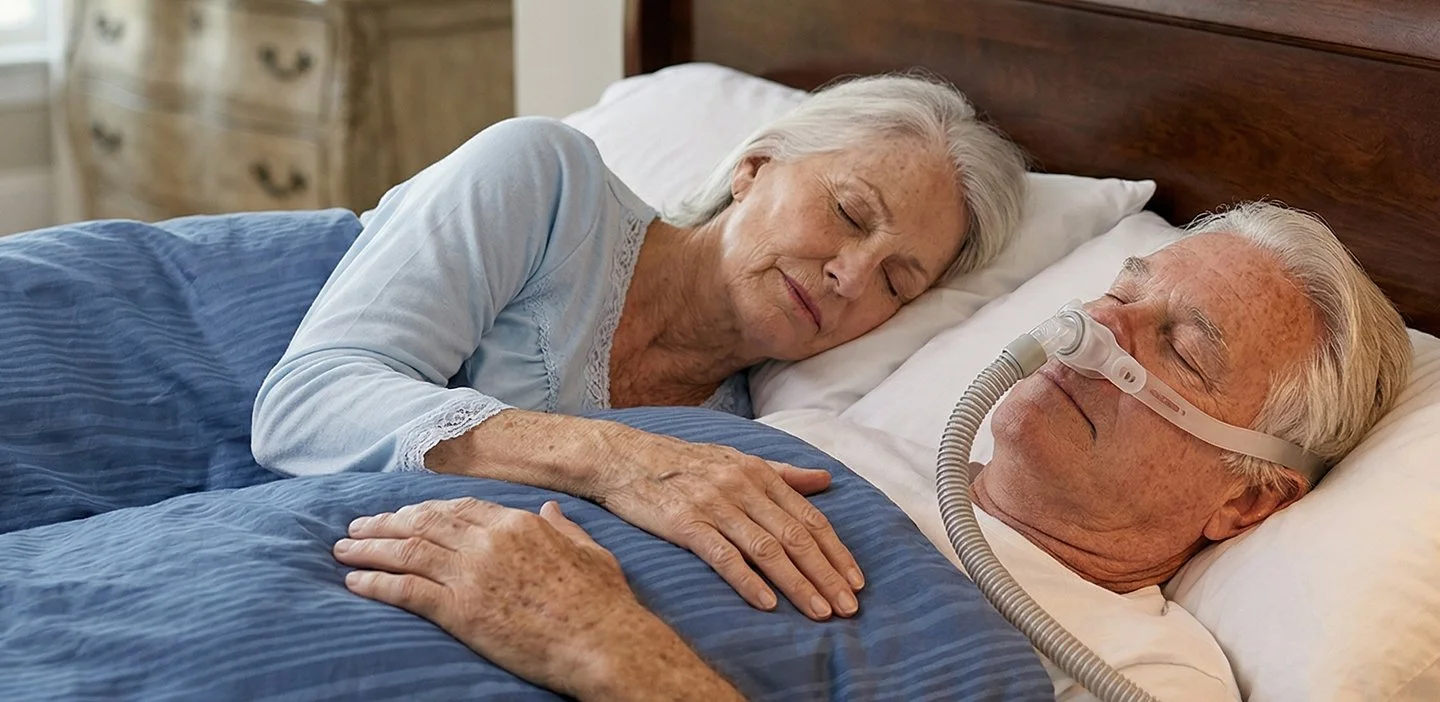
A nasal CPAP mask is any mask system that covers just the nose to deliver air for the PAP treatment. Nasal masks are generally used with a chin strap to prevent the air from going in the nasal passage and directly out of the mouth, thus eliminating the benefit of the PAP treatment.
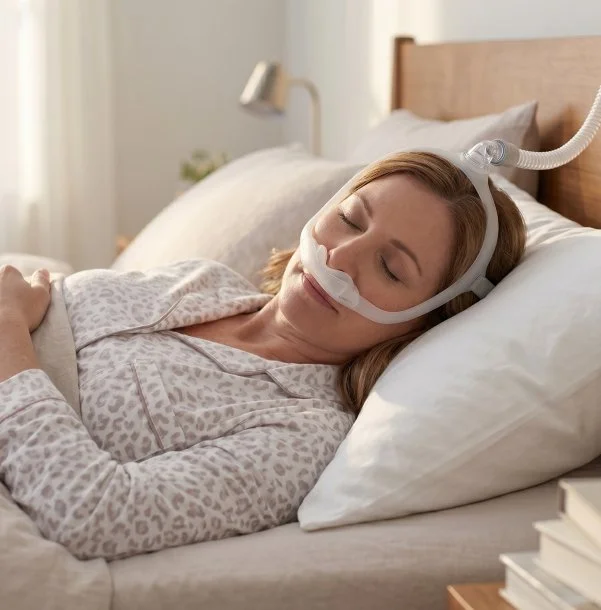
Nasal masks come in many different shapes, sizes and materials. Some use a silicone-type cushion to form a seal around the nose. Others use a thicker, heavier gel cushion that generally forms a better seal than other types but are usually more bulky and heavier than its silicone counterparts. Another type are the nasal prong or pillow style that go inside the nostrils, similar to nasal cannulas used in oxygen therapy.
Masks with a silicone type cushion include the Mirage FX by ResMed, the Wisp by Respironics, and the FlexiFit 407 by Fisher & Paykel. Gel cushion masks include the Softgel by ResMed and the Comfortgel by Respironics.
Nasal pillow masks are perhaps the most popular type of nasal masks, since they go inside the nostrils and don’t have anything sealing around the nose since the seal is inside the nostril. Nasal pillow masks include the Swift FX by ResMed and the Optilife by Respironics. Another type of nasal mask is the cloth mask called the Sleepweaver, made by Circadience. It is designed with the entire piece that forms the seal around the nose made of cloth to prevent marks on the face from over tightening the headgear straps.
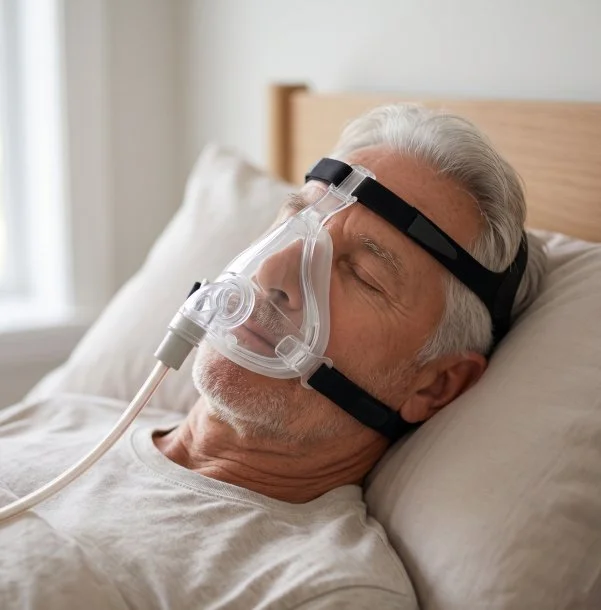
Understanding CPAP Full Face Masks
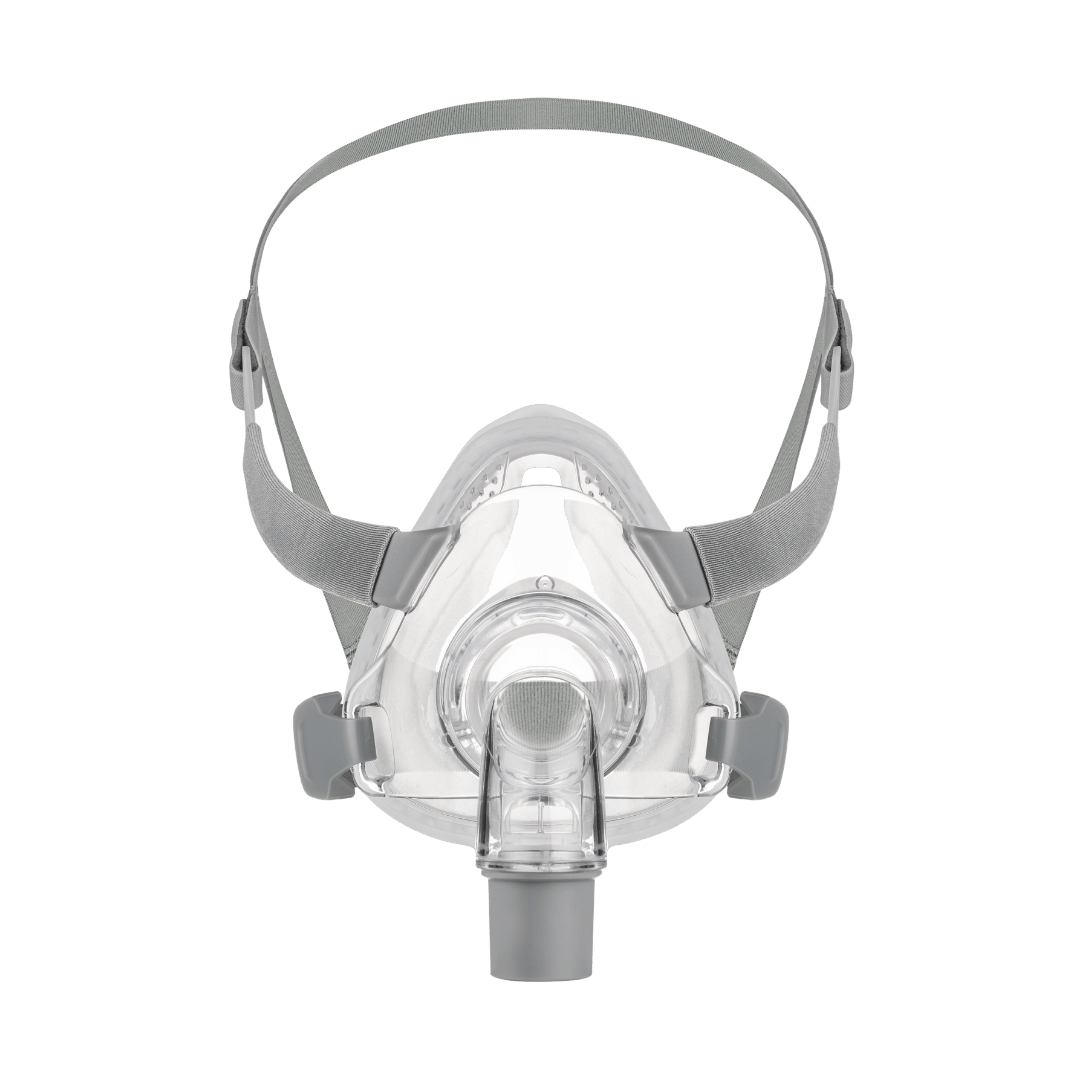
A full face CPAP mask is any mask system that covers both the mouth and the nose to deliver air for the PAP treatment. They are generally used on patients who have higher pressures that can’t be tolerated with a nasal mask, or patients who do not want to wear a chin strap to help keep the mouth from coming open during the night to prevent loss of PAP pressure, or for patients who are primarily mouth breathers.
ResMed has the Quattro and Quattro FX full face masks. Respironics has the Comfortgel and Amara. Fisher & Paykel has the FlexiFit 431 and 432.
Hybrid masks are an alternative to the standard full face mask, and they combine a standard full face mask with a nasal-pillows type mask that seals inside the nostril. With a cushion over the nose and nasal pillows inside the nostrils, it allows the mouth to come open during treatment and not lose pressure. Examples of hybrid masks are the Hybrid by InnoMed and the Liberty by ResMed.
Another alternative type of full face mask is a total face mask. A total face mask is a type of mask that in addition to covering the nose and mouth, also extends further and covers the eyes for patients who have difficulty in finding a full face mask that seals around the nose and mouth without excessive leaking. Respironics currently makes the only two total face masks on the market and they are the Total and FitLife.
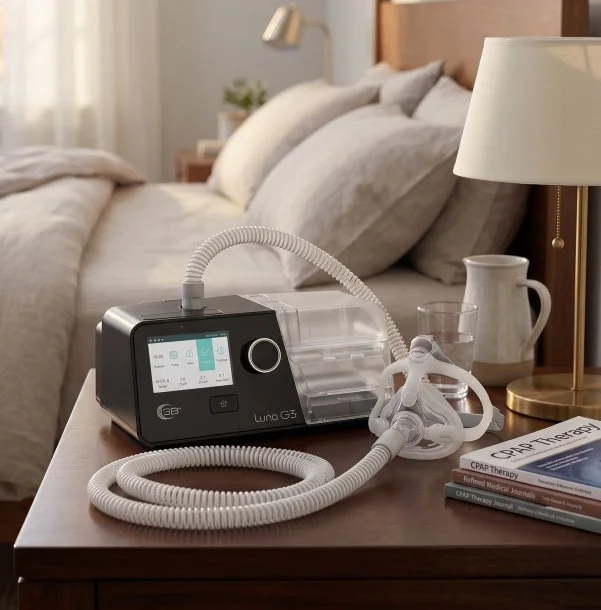
Understanding CPAP Machines
A continuous positive airway pressure machine, or CPAP is a device that uses room air delivered through a mask system to keep the airway open during sleep. A CPAP is generally used to treat mild obstructive sleep apnea by preventing the airway from collapsing on itself during sleep.
CPAPs are generally used with a heated humidifier that uses heat to turn water into a mist delivered with the air to prevent nasal passages and the mouth from getting dried out due to the airflow. Distilled water must be used in the humidifier to prevent mineral build up and deposits on the metal tank in the humidifier. Another comfort feature on CPAPs is called ramp.
This means the pressure will start lower and slowly build, or ramp up, to the prescribed level. A CPAP can either be a standard CPAP set at a single pressure or an Auto that has a range of pressures that adjust automatically based on the breathing of the user. All pressures or ranges must be set according to a prescription from a doctor and cannot be adjusted without a prescription.
ResMed, Respironics, and Fisher & Paykel are the major manufacturers of CPAP machines and the masks that are used with them to deliver the air. ResMed’s newest line of CPAPs is the S9 series, and the models include the Escape, Elite, Escape Auto and Autoset.
Respironics has the System One line, and the models include the Remstar, Remstar Pro, Remstar Plus and Remstar Auto. Fisher & Paykel has the Sleepstyle and Icon lines of machines, and the models include the 234, 242, Novo, Premo and Auto.
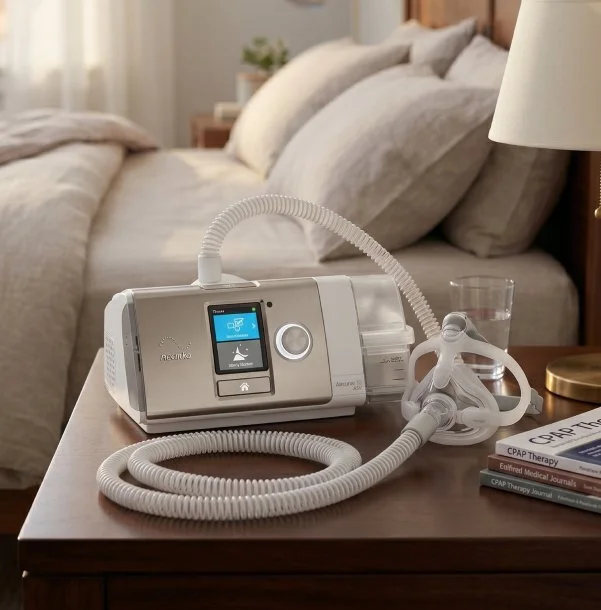
Understanding BiPAP Machines
A bilevel positive airway pressure machine, or BiPAP is like a CPAP in that it also uses room air delivered through a mask system to keep the airway open during sleep. The difference is that a BiPAP uses two different pre-set pressures for increased tolerance of PAP treatment.
A higher pressure is set as the inhale or IPAP pressure, and a lower pressure is set for the exhale pressure or EPAP. Like CPAPs, they also use heated humidifiers and ramp to increase patient tolerance and compliance. Like a CPAP, BiPAPs also come in Auto models that use a set range of pressures to determine how much air is needed at a given time.